
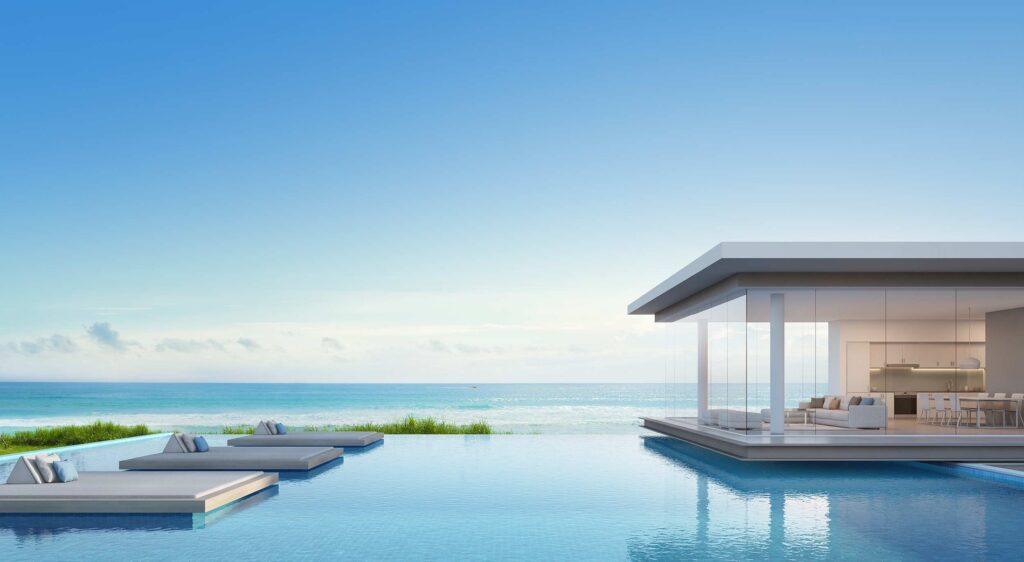
The quiet psychology of seafront living
Every year, thousands of people begin searching for a home by the sea.
They compare locations, study floor plans, calculate renovation costs and read countless property descriptions. They discuss square metres, energy ratings, airports, marinas and investment potential. All of those things matter, of course. Yet after many years of watching people visit waterfront homes, I have become convinced that very few ultimately make their decision because of a spreadsheet. Something else happens first.
I’ve seen it countless times. A family arrives after a long drive. They walk through the house rather quickly, asking sensible questions about insulation, plumbing or the age of the roof. Then someone opens the terrace doors. The conversation stops.
Nobody announces that they need a moment. Nobody says, “Listen to that.” They simply walk outside and look at the sea. Sometimes it lasts ten seconds. Sometimes a full minute. Whatever they had been discussing indoors suddenly seems less important.
For years I thought it was simply part of the excitement of viewing an exceptional property. Later I realised I was seeing exactly the same reaction again and again, in different regions, with different nationalities, in modest cottages and multi-million-euro villas alike.
There is something about the horizon that quietly rearranges our attention.
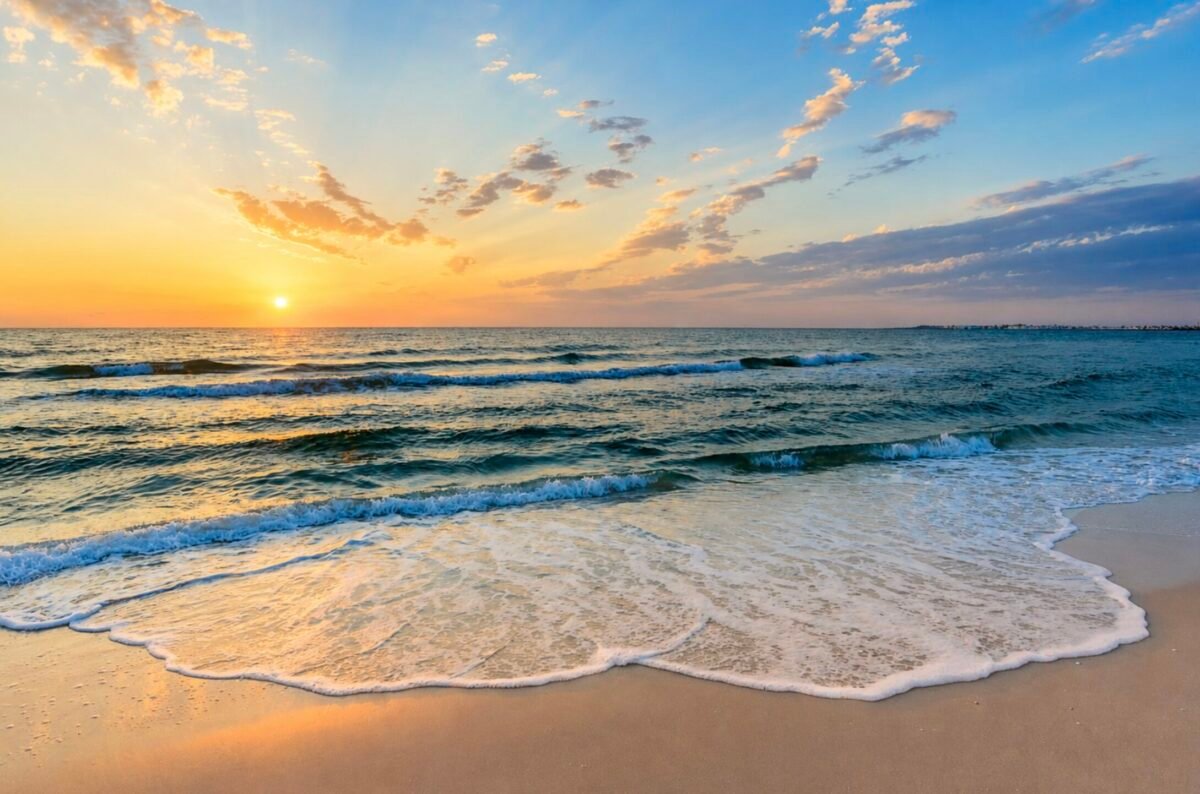
Cities rarely allow us to experience that feeling. No matter how beautiful they are, our eyes eventually meet another building, another street, another reminder of how densely the modern world is organised. At the coast, the landscape offers something entirely different. The horizon never asks anything of us. It doesn’t flash, vibrate or compete for our attention. It simply exists, and perhaps because of that, we begin to slow down without noticing.
Science has been trying to explain this for years. Marine biologist Wallace J. Nichols famously described what he called the Blue Mind state—a calm, mildly meditative condition that many people experience when they are close to water. Other researchers have reached similar conclusions, linking blue spaces with reduced stress, improved mood and greater mental clarity.
The research is fascinating, but I sometimes wonder whether it is simply giving scientific language to something people have understood instinctively for centuries.
Long before psychologists studied the sea, people were already building homes that faced it. Not because they had read academic papers. Because it felt right.
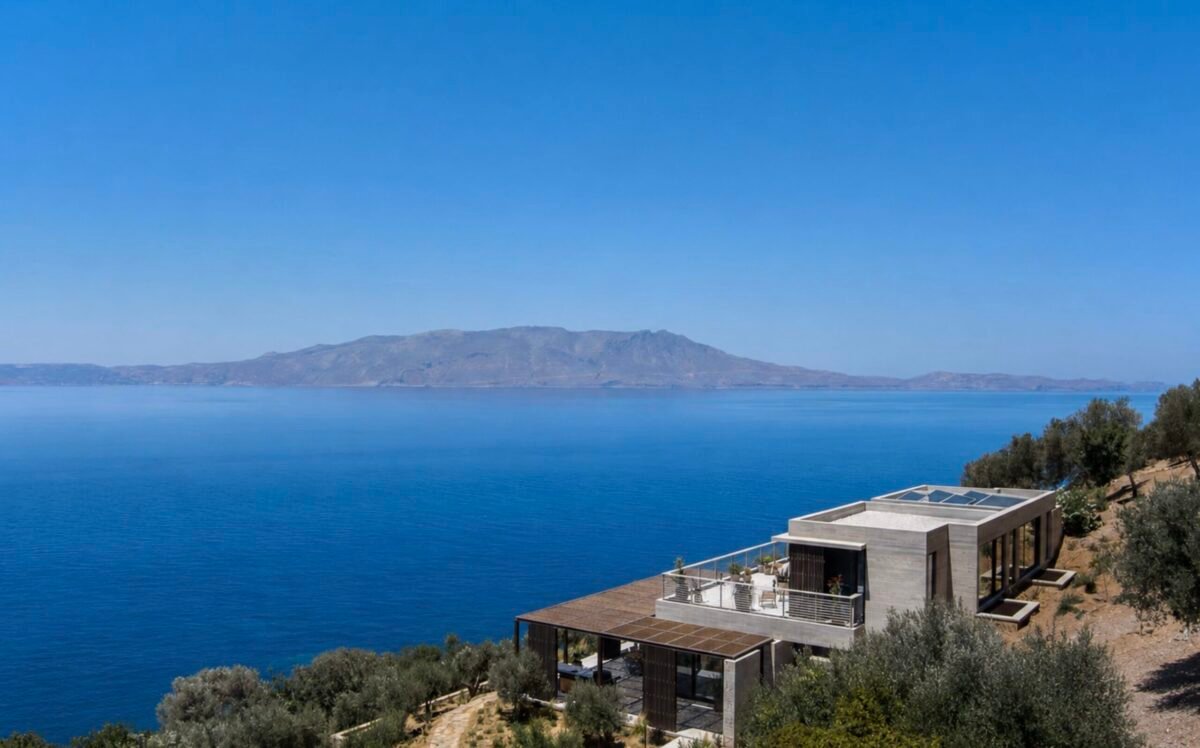
Perhaps that is also why the best seafront architecture rarely tries to dominate the landscape. The most memorable houses are often surprisingly restrained. Large windows are designed not to impress visitors but to disappear, allowing the changing light to become part of everyday life. Terraces become dining rooms for half the year. A shaded corner facing the water gradually turns into the place where everyone ends up after dinner, regardless of how comfortable the living room may be.
Good architecture frames the view. Great architecture almost makes you forget there is architecture at all.
Over the years, I have noticed another pattern.
When owners talk about homes they truly loved, they almost never begin with the house itself.
They remember swimming before breakfast while the sea was still perfectly calm. They remember children catching tiny fish from the rocks, evening conversations that lasted long after the plates had been cleared, or the particular smell of pine trees carried inland by the wind after sunset. In other words, they remember a life. The house was simply where that life happened.
This may explain something that often surprises people outside the luxury property market. Truly exceptional seafront homes are remarkably difficult to buy, not only because there are relatively few of them, but because families tend to keep them for decades. A waterfront house is rarely just another asset in a portfolio. More often, it becomes the place where birthdays, summers and family traditions quietly accumulate until leaving feels like giving up part of your own history. That attachment cannot be measured in square metres. Nor can it be fully explained by market value. It belongs to memory instead.
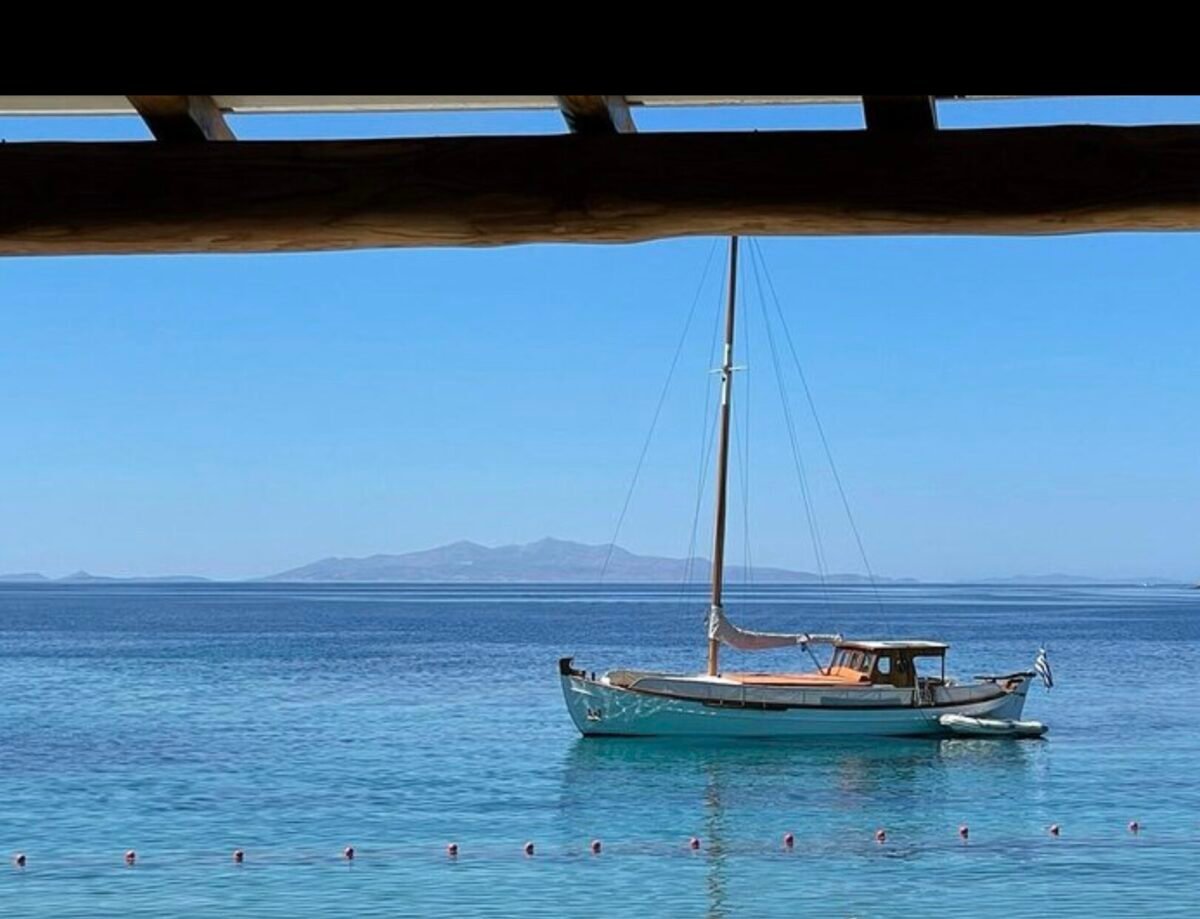
Greece has always understood this relationship between home and sea particularly well. With one of the longest coastlines in the Mediterranean, the country offers an astonishing variety of landscapes. The rugged cliffs of the Cyclades have little in common with the pine-covered shores of Halkidiki or the lush green bays of Corfu. Yet wherever you go, daily life seems to drift naturally outdoors. Dinner begins later. Morning swims become routine rather than special occasions. Time is still measured by the position of the sun as much as by the clock.
People often describe this as the Mediterranean lifestyle. I’m not sure that expression goes far enough. It is, perhaps, a different relationship with time itself.
Luxury has changed considerably over the past decade. Once it was defined by size, exclusivity and visible symbols of success. Increasingly, however, the people searching for waterfront homes are looking for something far less tangible. They are looking for privacy, silence, authenticity and the simple privilege of living somewhere that asks them to slow down rather than speed up.
A seafront home cannot promise happiness. No home can. But every now and then, a place changes the rhythm of our days so quietly that we only recognise it years later, when we find ourselves missing not the house, but the life we lived there.
Perhaps that has been the true value of living by the sea all along.